Nearly 40% of Americans relied on telehealth between March and November 2022, and roughly 80% of US consumers have tried telehealth.
It’s not hard to see what prompted this rise in popularity: telehealth offers a simple and convenient way to get medical advice and prescriptions, without taking time out of a busy schedule to physically visit a doctor’s office.
But this raises a question: what is telehealth, and is there a difference between Ovadia Heart Health and others?
That’s what we’ll explore in this article.
What’s the problem with telehealth?
There is nothing inherently wrong with telehealth. It’s an excellent idea, especially in our modern world of connectivity.
But it’s worth doing your due diligence before choosing a provider, because it’s a broad term that includes different types of care. For example, some companies will focus on doctor-patient consultations and treatment planning, while others may be more prescription-focused (it can be a popular way of obtaining GLP-1s, for instance). One recent analysis found that less than a third of 50 telehealth companies selling these drugs required a physician consultation. That’s what some people want, but you’d be frustrated if your expectation was to speak with a medical expert.
Before committing to a service, look at the reviews, find out exactly what is included in the plan, as well as how easy it is to cancel your subscription.
The Ovadia Heart Health difference
We’re often asked what a consultation is like with Ovadia Heart Health. For us, an enormous piece of the health puzzle is proactivity.
I want to state upfront that rather than a typical telehealth company, we’re a medical practice that happens to deliver our care through telehealth, in order to be a viable option for people that would otherwise be too far away.
Our goal is to maximize both lifespan and healthspan, so we prioritize metabolic health. We also want our patients to be empowered and feel like an active partner in their health journey, rather than like they’re following “doctor’s orders.” That’s why we incorporate dedicated check-ins.
At the start, we want to know what’s going on with your heart and your metabolic health. This requires taking a closer look than a standard doctor’s visit. Typically, it involves advanced blood work that goes beyond a routine lipid panel. We may also recommend getting a coronary calcium scan to help us understand the health of your arteries. We’ll look at how you score against the five metabolic markers, as this gives us a much stronger picture of your heart health than a cholesterol reading.
If there are any other diagnostics your physician determines you need, we make sure to do our due diligence alongside you before making any recommendations for your care. Taken together, this gives us a coherent picture of your health, so you get advice that’s tailored to your specific situation.
Alongside that, you have a team built around ongoing support: health coaches and nurse practitioners who work with you between visits, turning your results into a plan built around your numbers, your risk, and your life, not a generic protocol. This plan and the support team are designed for you to be able to follow and benefit from, rather than reading a list of recommendations once and then forgetting about it.
Ovadia Heart Health patients also have direct access to our lead physicians. I’m a board-certified cardiac surgeon, and Dr. Aseem Malhotra is an interventional cardiologist with 25+ years in cardiology and a specialist focus on preventive care.
Alongside our support, you’ll have an assigned, dedicated team of health coaches and nurse practitioners to work with you between visits. The goal is to take your healthcare information and build a plan around your numbers, risk profiles, and lifestyle.
And I wish this went without saying, but I’ll say it explicitly: we don’t sell customer data to any third parties. We don’t even work with traditional insurance, because we want to ensure that you have direct access to care without the cost-cutting measures. Cash pay is transparent, and there are no sneaky subscriptions you need to worry about cancelling.
Is it safe to work with a telehealth company?
Generally yes, telehealth is not inherently dangerous but not all practices are equal, so it does pay to choose wisely. Working with dubious companies without authenticated health credentials, or signing up for platforms known for selling your data to third parties, are all things to be avoided.
But on the other hand, if you’re working alongside:
- A proven team of medical professionals, with direct access to them during your care
- A community group offering to refine your knowledge, and offer support and feedback throughout your journey
- Health coaches and nurse practitioners who work with you between visits and answer questions and comments as you need
Then you could be making the best possible investment for your health, with the personalized care and attention you need.
Here are a few questions to ask before signing up with a provider:
- How long have you been in business?
- How do existing customers rate the service?
- What are the qualifications and experience of the doctors?
- What level of support will I receive as a customer?
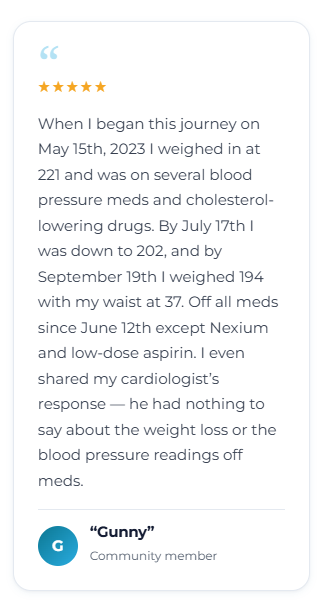
Ovadia Heart Health is transparent with all of these things, and you can learn more about the practice here. Then I’d invite you to check out some recent patient testimonials.