Heart disease has long been considered the outcome of high bad cholesterol (LDL). But research has repeatedly shown that high LDL is rarely a problem on its own.
One area that’s been getting attention is the idea that fatty acid oxidation, particularly from omega-6, is increasing our risks of heart disease.
Here, we’ll take a closer look at fatty acid oxidation and how it interplays with America’s heart health crisis.
A simple explanation of fatty acid oxidation
Oxidation is essentially damage caused by oxygen. If you’ve ever seen how metal rusts when exposed to water, you’re already familiar with oxidation reactions.
In the body, oxidation occurs when unstable molecules, called free radicals, burn or damage cells (including fat). Antioxidants can help to protect against this by binding to free radicals.
So what causes fat to oxidize?
- High levels of free radicals from things like smoking, pollution, stress, or poor diet
- Not enough antioxidants such as vitamin E or polyphenols
- Too many omega-6 fatty acids
Let’s take a closer look at omega-6 below.
Quick breakdown of omega-6 vs omega-3
Omegas 3 and 6 are considered essential fatty acids (EFAs), because the body can’t produce them on their own. Instead, we need to incorporate them into our diet.
Omega-3 helps to naturally reduce inflammation and occurs in foods including:
- Salmon
- Tuna
- Flaxseed
- Walnuts (watch the oxalates)
Omega-6 helps with cell function, including growth and repair. It naturally occurs in foods like:
- Almonds
- Red meat
- Eggs
- Avocados
A range of 11 to 22 grams of omega-6 per day is considered plenty for most adults. With such a wide variety of food, you’re most likely already getting enough, whether you’re following a keto, carnivore, or even vegan diet.
Getting a good ratio between the two is beneficial, with intake of omega-3 being higher than that of omega-6. Studies show that eating too much omega-6 fat will raise your risk for inflammation and chronic disease, and it can also have an enormous impact on the heart.
This is the problem the average American faces today: they eat around 20 grams of omega-6 to just one gram of omega-3 per day. That’s because the vast majority of omega-6 today is in processed vegetable and seed oils. Case in point: corn oil has an omega-6/3 ratio of approximately 60:1, while safflower oil has a ratio of 77:1.
How omega-6 oxidation impacts the heart
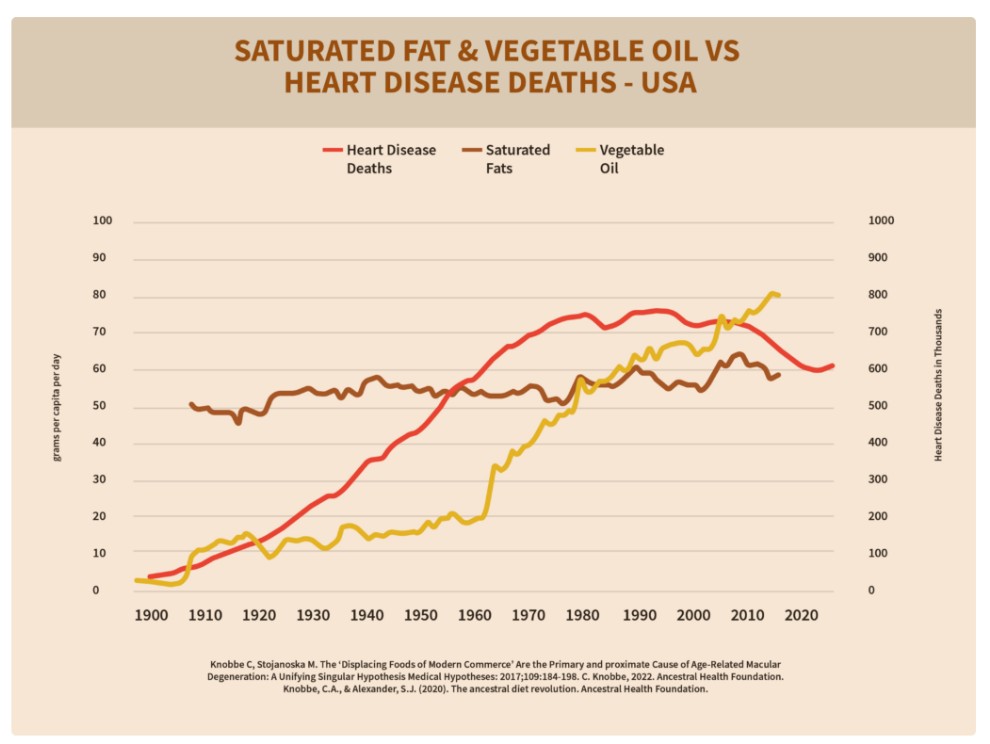
Most fatty acid oxidation occurs in your LDL cholesterol. Cholesterol itself isn’t unstable, but linoleic acid (omega-6) is. It’s also the most common fatty acid in LDL cholesterol, and often one of the first to oxidize in the body.
When you eat a lot of omega-6, more of it gets circulated into your LDL. This makes your LDL far more likely to oxidize and trigger heart problems in the future.
Here’s just the tip of the iceberg:
- Oxidized omega-6 creates toxic byproducts
- These byproducts damage your LDL and make it difficult to recycle
- Immune cells consume these oxidized particles, which leads to foam cells, plaque, and eventually atherosclerosis
- Omega-6 can promote inflammation by releasing cytokines like interleukin-1B
- It can also directly damage the blood vessel lining (endothelium), which increases the likelihood of more plaque build-up in the future
We can see more evidence that omega-6 is an instigator of heart disease by looking at plaque severity in patients. The more oxidized linoleic acid in their artery walls, the worse the atherosclerosis may be. Plaque typically matches their level of oxidation, as “the degree of oxidation determines the severity of atherosclerosis.”
We also know that patients who have died from sudden cardiac arrest have more omega-6 and less omega-3 in their arteries compared to patients who did not die from a heart attack.
So to summarize: high LDL only becomes dangerous when its cargo gets damaged, and consuming large amounts of omega-6 may expedite this process.
But doesn’t linoleic acid reduce your risk for heart disease?
There’s quite a lot of science with quite a lot of opinion, especially when it comes to seed oil and vegetable oil.
I’ll summarize the details here for you to reach your own conclusions.
The pros:
- Omega-6 can lower your total cholesterol and ‘bad’ cholesterol numbers. But as we know, LDL in a vacuum doesn’t tell us much.
The cons:
- Omega-6 raises levels of small, dense LDL, which is the more dangerous type of LDL. You can learn more about this in my write-up on advanced lipid metrics.
- Omega-6 can lower HDL (or ‘good’ cholesterol), which you want to stay high.
- Omega-6 can raise triglycerides, which is another type of blood fat linked to heart disease.
Can fatty acid oxidation be stopped?
Oxidation can be stopped, and in some cases, reversed. But as they say, an ounce of prevention is worth a pound of cure.
The good news: studies show that inhibiting fatty acid oxidation in the heart may actually regenerate heart function even after damage has occurred.
Below are a few different methods that have been proven to reduce risk, address oxidation, and protect your metabolic health.
Eliminate processed foods
Processed food is one of the main sources of omega-6 fat in the US.
This means avoiding packaged foods with dubious ingredient lists can help you immediately reduce the amount of omega-6 in your diet.
Don’t worry too much about intake at first. At the end of the day, I just want you to eat more whole, real food. But if you’re already at risk or currently suffering from a chronic disease, you might consider keeping omega-6 intake to 4 grams per day and aiming to eat a greater quantity of omega-3..
Optimize your omega-6/3 ratio
As mentioned earlier, the ratio of omega-6 to omega-3 can have a significant effect on your heart health.
Science suggests keeping an omega-6/3 ratio no greater than 4:1, with an optimal ratio being 1:1.
But don’t worry too much about being optimal to begin with, just start somewhere rather than making it perfect.
You can always try supplements, but keep in mind omega-3 isn’t immune to oxidation. So if you’re going to take capsules or eat fish oil in your diet, be sure to choose a high-quality, cold-pressed source.
This leads to my next point…
Know where your food comes from
Not all food offers the same nutrient density. Differences in cultivation, packaging, and storage or delivery can have a monumental impact on its omega 6/3 ratio.
Let’s consider a common boogeyman: red meat. In commercially farmed operations, the ratio of omega-6 to omega-3 is around 15:1 to 20:1. But grass-fed beef typically has a closer ratio of 3:1. Microproducers following rotationally based practices can get their ratios down to 1:1.4.
This quality concept applies in multiple ways:
- Pastured chicken eggs contain 3x as much omega-3 as cage-free eggs, as well as a 10x lower omega-6/3 fatty acid ratio.
- Grass-fed organic milk has a nearly 1:1 omega-6/3 fatty acid ratio, which is much lower than conventional whole milk (around 5.7:1).
- Wild salmon contain 66% more omega-3 than farmed salmon, with farmed salmon containing 20x higher omega-6 fats than their wild counterparts.
In other words, you don’t necessarily need to overhaul your diet completely. You need to know where your food comes from.
You can learn more about the best meat to eat for your heart in my comprehensive guide.
Fast regularly
Research shows that regular fasting may decrease oxidative stress in the heart and brain. Interestingly, fasting may specifically target lipid oxidation and can increase total antioxidant capacity in human blood.
There are many other reasons to consider fasting for metabolic health, including optimizing energy metabolism and reducing inflammation.
I talk more about how to fast in my dedicated guide.
Restoring your heart health by restoring your diet
If you want to protect and heal your heart, you need to focus on three things:
- Eating more omega-3
- Choosing foods that already have optimal omega-6/3 ratios
- Consuming more stable fat sources, including saturated fat. One meta-analysis found that replacing saturated fat with omega-6 actually increased heart disease and all-cause death.
Learn more about what it takes to reverse heart plaque here.