There are many ways to keep tabs on metabolic health from home, as I’ve previously written here on my blog.
But even if some numbers look normal, there is still an independent factor worth exploring: your resting heart rate, or RHR.
What your heart rate says about your metabolic health
You’re likely aware that what you look like externally doesn’t paint a full picture of how healthy you are internally. Even lean or physically fit people can have high blood sugar or blood pressure, which ultimately puts them at a higher risk for heart disease. This is one of the reasons why more and more young people are at risk for metabolic disruption.
This means we need to look closer at what’s happening inside your body — starting with your resting heart rate.
For the unfamiliar, your resting heart rate (RHR) is a measure of how often your heart pumps blood when you’re not exercising. A lower rate usually means your heart is more efficient. A higher heart rate at rest means your heart needs to work extra hard to move blood, which may indicate the presence of potentially dangerous risk factors.
Recent studies have found that having a raised resting heart rate “is significantly associated with the presence of Metabolic Syndrome in a group of apparently healthy individuals and those with an atherothrombotic risk.” This means metabolic syndrome can be present even in populations that look healthy at first glance.
Other studies found that a high heart rate is associated with metabolic syndrome regardless of other metabolic factors. After adjusting for BMI, smoking and drinking, education, physical activity, and insulin (HOMA-IR), those with the highest resting heart rates were 1.42 times more likely to develop metabolic syndrome than those with lower heart rates.
To summarize: even if your insulin looks normal and you avoid habits like smoking and drinking, a high resting heart rate can still put you at risk for metabolic syndrome.
How to test your RHR in 30 seconds or less
First, sit down and get yourself comfortable. You might want to check right after waking up in the morning and before getting out of bed. Otherwise, find a restful time at least two hours after exercise and one hour after consuming caffeine.
The next step is calculating your beats per minute. You can do this in a few different ways:
- Using your index and middle finger, press below your thumb, on your wrist, or on your neck. Count the number of beats for 60 seconds to get your beats per minute (BPM). Or, if you’re short on time, count for 30 seconds and then double the pulses you count.
- Use a blood pressure or heart rate monitor. If you don’t have a dedicated tool for this purpose, you can always try wearable tech like rings or watches.
- Compare your numbers to the healthy range. For context, an RHR between 81 and 90 may double your risk of a heart attack death. An RHR higher than 90 could triple it.
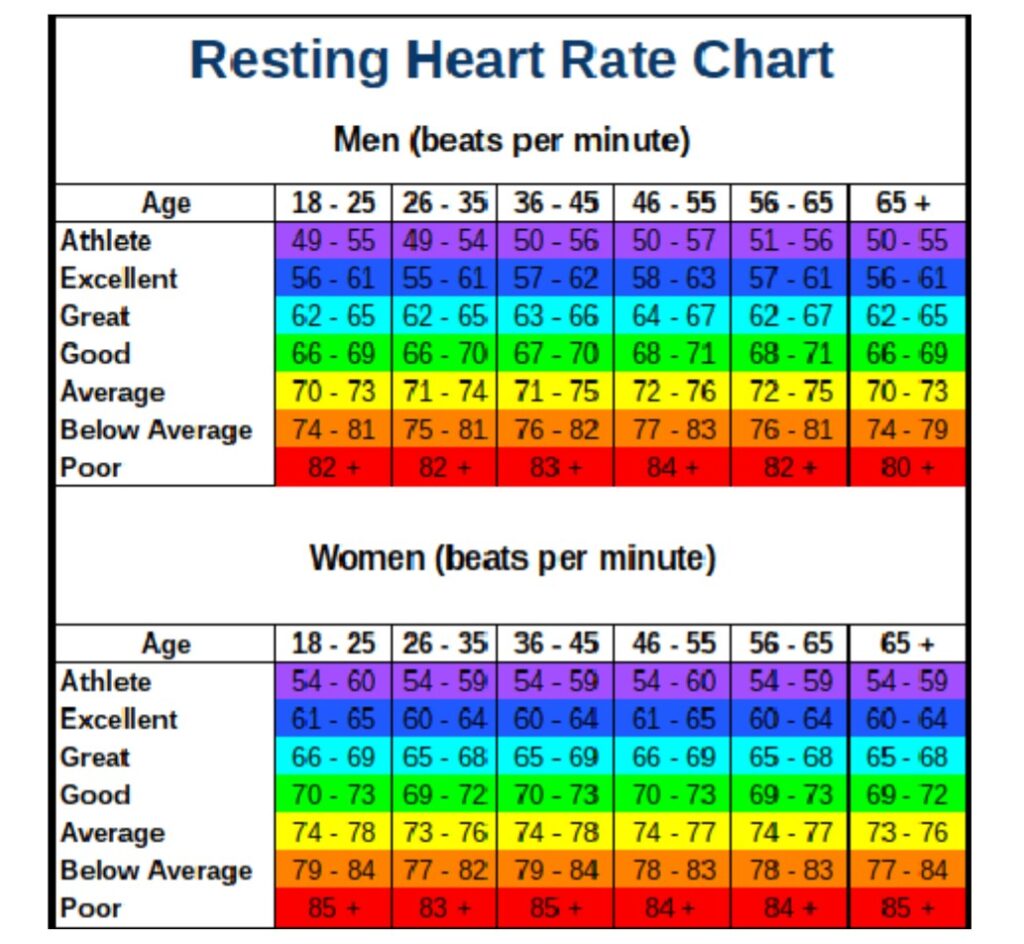
Here’s a quick reference range that may be helpful as you look at your numbers:
A quick caveat
I should quickly mention that RHR can be a reflection of your environment as much as your lifestyle.
Here are a few such factors:
- Strong emotions or short periods of stress
- Body position, such as if you’re lying down or standing up
- Air temperature (hot weather typically raises your heart rate)
If your RHR seems high and other elements look normal, then by all means, consider if one of these other elements is to blame.
But if you’re still worried about your numbers, you can also invest in more comprehensive blood work, like advanced lipid testing to check for accuracy.
Again, the goal is to keep your number below 80 BPM, and if possible, within a range of 66 to 73 BPM.
If you’re above that number, you’re possibly in a high-risk zone and battling with metabolic syndrome.
Below are some ways to help manage a high RHR and lower your BPM to a healthy range.
How to slow your resting heart rate
There are a few different ways to improve your resting heart rate:
Improve sleep quality
Poor sleep quality, shorter sleep durations, and mismatched bedtimes can all impact your overall sleep quality.
Some suggestions to improve this:
- Focus on getting seven to nine hours of sleep per night. Avoiding deprivation will work wonders on your heart rate, blood pressure, and even blood sugar modulation.
- Go to bed at the same time each night. Even sleeping 30 minutes off from your usual time can increase your RHR.
- Minimize distractions causing fragmented sleep. This means keeping your room cool, potentially using blackout curtains, or using sleep aids like white noise or headphones. Disrupted sleep can release hormones that spike your heart rate and contribute to other conditions like diabetes and heart disease.
Learn stress management
I don’t expect you to eliminate all stress, but I do want you to find healthy ways of managing it.
Breathwork and meditation are frequently suggested options, although you can also opt for new hobbies, regular gatherings with friends, or dedicated quiet times during the week.
Another major option is regular exercise.
Which leads into the next point…
Exercise often
You don’t need multiple hours at the gym. Just a few concentrated times throughout your day and week.
Just keep in mind that effort matters.
A study of 55-year-old adults found that an hour of high-intensity exercise per week can lower your RHR more efficiently than low-intensity exercise.
Reconsider your medications
Many medications on the market today can have a marked impact on your RHR.
This includes prescription and non-prescription medications:
- Cough, cold, and allergy pills
- Thyroid medication
- Antidepressants
- Asthma
I’m not going to tell you to stop these medications, especially if you’re working with a doctor you trust. But I strongly believe you don’t always need medication to manage chronic disease, and it may be worthwhile to think more deeply about alternatives for your lifestyle.
Measuring your efforts to reduce RHR
If you’re currently working on lowering your heart rate, now is a great time to benchmark your progress.
First, record your daily RHR and look for pattern changes. It might take somewhere between two weeks and 90 days before you see progress. But that doesn’t mean you’re not making substantial strides in the meantime.
You should also keep an eye on the other signs of metabolic health. Most of us get a fairly accurate idea from five at-home measurements:
- Blood sugar: Less than 100 mg/dL when fasted for 12 hours
- Blood pressure: Less than 130/85
- Triglycerides: Less than 150 mg/dL
- HDL cholesterol: Over 40 mg/dL for men and over 50 mg/dL for women
- Waist circumference: Less than 40 inches for men and less than 35 inches for women.
I would also encourage you to test with more extensive blood work. I’ve got a few suggestions in the resources below:
- 3 ways to test your metabolic health
- Are You Getting the Right Heart Disease Screening Tests?
- 5 Tests that Measure Your Risks for Heart Disease
Now that you have your numbers on hand, you can complete my free metabolic health quiz in 15 minutes or less.