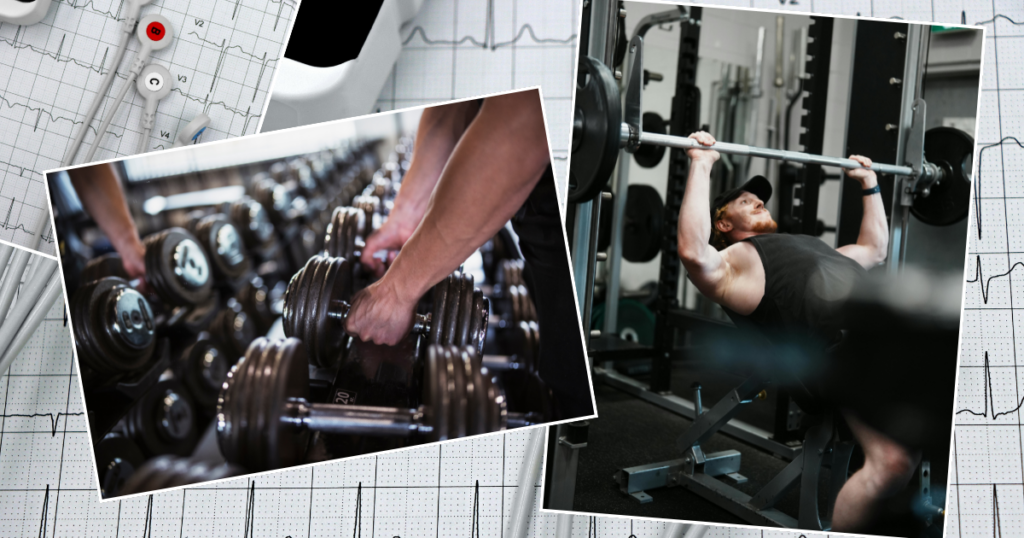
It seems to have become a disturbingly common question, with news outlets reporting “rising cardiac deaths among gym-goers.” Whenever a story goes viral about someone collapsing at the gym, we wonder: was this brought on by the exercise itself?
It’s true that weightlifting puts your body under strain, but resistance training is a huge positive for your metabolic health.
The question is, are you at risk?
Let’s take a closer look at what we know about weightlifting and heart attacks.
First, what happens to your heart when you lift
We already know the basic function of exercise: to build metabolically healthy muscle and strengthen your heart.
But strength training affects the heart very differently from cardio. Unlike sustained output like running, resistance training creates shorter, more intense spikes in pressure and demand.
Here’s what happens in your body when you prepare to lift weights:
- Your heart rate increases to around 60% to 85% of your maximum heart rate, depending on the load and your current conditioning.
- Your blood pressure spikes higher than with typical cardio exercises — temporarily doubling or even tripling your pressure values. The numbers go even higher if you hold your breath. For most healthy individuals, this is short-lived and rarely accompanies long-term health effects.
- Your veins compress under tension, which helps drive blood back to the heart more forcefully when you’ve finished your set.
Continued weight lifting over a period of eight to 12 weeks results in a wide variety of cardiometabolic benefits. For one thing, your heart wall becomes thicker. This improves its ability to pump blood around your body and ultimately lowers your resting heart rate. Plus, you can achieve better insulin sensitivity, reduce inflammation, and improve your cellular health.
Now, a look at the research on weightlifting and SCD
You can see there are many, many upsides to regularly lifting weights. But what about the evidence to suggest that weightlifting may be associated with a higher risk of cardiac death?
A 2025 study found that a whopping 38% of all deaths experienced by male bodybuilders were classified as sudden cardiac death (or SCD). Those competing professionally were five times more likely to suffer from SCD than newer bodybuilders with little to no experience.
The same applies to female weightlifters. According to one study performed in 2025, the average age at death amongst a cohort of female bodybuilders was just 42 years old. One-third of all deaths were from SCD. Additionally, heart attack risks were 20x higher among professional bodybuilders versus amateurs.
You should also know that many famous weightlifters have died of heart attacks before the age of 50, including women. For example:
- Mike Matarazzo, age 47
- Lorena Blanco, age 37
- Dan Puckett, age 22
But does this risk stem specifically from lifting weights? Or something else?
An alternative explanation of weightlifting and heart attacks
The question is, can we attribute the risk to lifting weights? Or are there other factors at play that are complicating things?
Here’s my professional opinion as a heart surgeon of 30+ years:
- Professional bodybuilders don’t always train using natural methods. By that, I mean steroid abuse, which is present in half of all men and two in five women. We know even low doses of steroids can inflict damage on your heart. Case in point: weightlifters using anabolic steroids for more than two years had significantly weaker and worse heart function than those who had never used steroids.
- Not all weightlifters follow metabolically healthy practices. Just because you look muscular and fit doesn’t necessarily mean your heart is healthy. Along the same vein, not all weightlifters know their hearts are at risk. If there are previously existing (but undiagnosed) conditions such as hypertrophic cardiomyopathy or coronary artery disease, the effort of lifting could lead to cardiac arrest.
- Weightlifting has more of a positive effect on the heart than a negative one. Not only does it improve glucose control and vein elasticity, but it also lowers your risk of overall mortality.
Overall, keep in mind that there is a vast difference between competitors and a person lifting weights solely for the health benefits.
With a look at the evidence, as well as some past case studies, we can see that the benefits far outweigh the drawbacks.
But that’s not to say you should jump in with both feet.
So, is it safe for you to lift weights?
That depends on your state of health.
If you’re familiar with gyms, don’t have a history of heart disease, and have a ‘clean’ metabolic panel and CAC scan, there’s a very good chance you won’t have any issues.
If you fall into any of the reverse categories, don’t fret. Weightlifting is still on the table (and frankly, highly recommended). But you may need some additional protections in place.
A few suggestions as you begin:
- Hydrate, hydrate, hydrate. Sweating during exercise can deplete essential electrolytes, which ultimately disrupts electrical signals in the heart and increases your risk for heart attacks.
- Don’t go alone. This is especially true if you want to lift very heavy, or if you have a higher-than-average CAC score. If you feel too weak to complete a rep, a spotter can guide the weight back without it falling or potentially harming you. And if you do start feeling strange symptoms while exercising, you’ll have another person there to drive you to a medical office.
- Listen to your body’s warning signs. Immediately pause your workout routine if you notice chest pain, dizziness, or out-of-order heartbeats. It’s just not worth it to push through that last rep. Especially if it could, quite literally, be your last.
I also recommend beginning with lighter resistance training exercises until you’re comfortable with more advanced routines.
You can start with some of these exercises to improve cardiovascular health. Or, even this roundup of the best exercises to strengthen your heart.