Males and females have different presentations of metabolic health. What looks ‘normal’ to a male population may be concerning or even dangerous to a female population, which is one of the reasons why current heart health guidelines fail women.
That’s why I’ve collected some of the most common questions I get about female heart health for this article. This includes some statistics, very common myths, and where to get more information about female metabolic health.
First, a quick note on definitions
Before we dive into specifics, I wanted to provide a quick caveat to the language used.
The terms ‘female’ and ‘women’ used in this article refer to biological sex, not gender. If you were born with XX chromosomes, this article will be more relevant to you.
There’s also no age limitation here. Whether you’re 18 or 80, this information is still relevant. But keep in mind it’s more relevant to women at pre- or post-menopausal age, so roughly 45 to 58.
With definitions out of the way, let’s dive into the questions.
Dispelling major myths about female metabolic health
I’m covering several of the high points you should know about female metabolic health, including the voices of experts I’ve had the privilege to speak with. I also cover a few practical points you can share with others (or implement in your own life).
Let’s get started.
“Do women suffer from metabolic syndrome more often than men?”
Verdict: Yes and no.
More recent studies say metabolic syndrome is more common in females than in males.
The opposite was true back in 2006, but 20 years later, we see a much different picture.
We could chalk this up to a number of things — diet, hormones, endocrine disruptors, etc. — but one of the biggest factors in my opinion is a poor understanding of the underlying factors of metabolic syndrome onset. Not to mention the misunderstood interplay between female hormones and metabolic health.
Speaking of..
“Will menopause make my heart less healthy?”
Verdict: Yes and no.
No, menopause doesn’t instantly make your heart unhealthy. Nor does it technically progress any cardiac conditions such as poor heart health. But it can remove a protective hormone layer that prevents certain lifestyle habits from having a major effect on your heart.
That’s why so many more women are more likely to suffer from heart disease after 50.
But of course, hormone therapy post menopause is complex. We have a Nurse Practitioner who specializes in helping women navigate this change, and you’re welcome to book a call with her and get in touch here.
“Doesn’t hormone replacement therapy (HRT) ruin heart health for women?”
Verdict: False.
This is a topic that has been very misunderstood.
There was a study approximately 15 years ago that purported that women taking HRT are at increased risk of cardiovascular disease.
Since then, that has been thoroughly debunked.
Let me give you some reassurances:
- The study used a form of HRT that was high-dose and synthetic. Most doctors who manage HRT would no longer even consider using this form. These days, we rely on bioidentical hormones.
- Much of the study focuses on the benefits of HRT. The negatives, unfortunately, were heavily mischaracterized by reporting outlets.
- The first HRT drugs did not include progesterone to minimize risk. This, again, has been corrected in recent years.
Interestingly, more modern evidence suggests that HRT can be protective, not harmful, from a cardiovascular perspective.
So for anyone having symptoms related to hormone deficiency (menopause), bioidentical HRT is a great option.
It’s far better to focus on the female biomarkers of metabolic syndrome, which we cover in the section at the bottom of this guide.
“Is heart disease worse for men than women?”
Verdict: Yes, in terms of mortality.
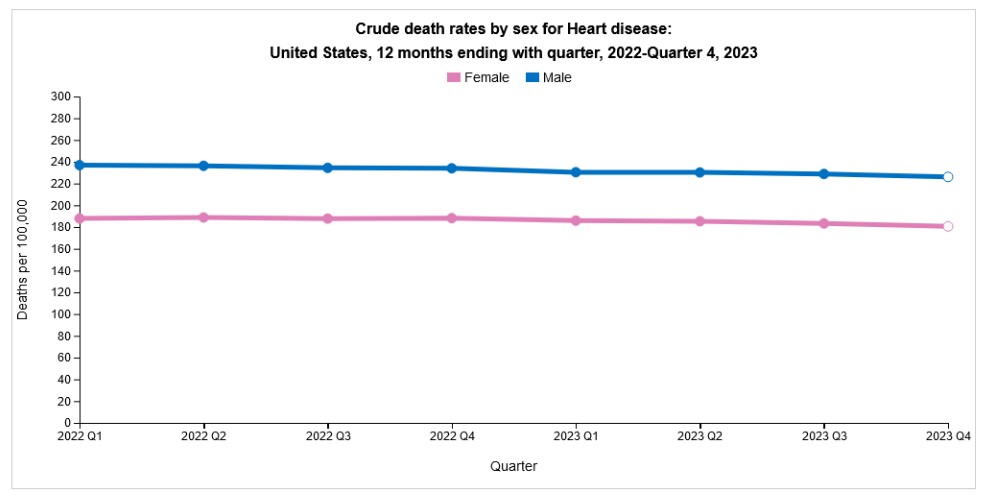
Studies show that heart disease is more dangerous to men than women. That’s simply because men typically die more often from their first heart attack, at a rate of about ~240 out of 100,000 per year. A somewhat smaller number, around 185 out of 100,000 women, will die from heart disease.
These numbers give us a slightly better idea of just how complicated women’s metabolic health can be. But it doesn’t necessarily give us the full picture of how it functions differently, or what to do about it. Because let’s face it: it’s borderline impossible to ‘do your own research’ when it seems all the experts disagree.
So instead, rely on what your body is telling you.
Get your lab work done, and get it interpreted to look for possible problems.
“Can women survive on low-carb diets?”
Verdict: Yes — and thrive.
There is no specific reason why women cannot follow a long-term carnivore diet.
Yes, this applies even if you’re pregnant or nursing. See this case study for how one pregnant woman discontinued all medications while pregnant due to the carnivore diet. And another study found that women following the Planetary Health Diet (aka EAT-Lancet, or a low-meat diet) typically have unhealthier fetuses.
Even for women outside of their childbearing years, the carnivore diet can work wonders on metabolic health.
No need to take my word for it, though. Here’s what Lisa Simmons, Nurse Practitioner at Ovadia Heart Health, had to say:
“I’ve been a yo-yo dieter my entire life, trying every fad diet from Weight Watchers to Nutrisystem. Starting keto was a game-changer. I lost 50 pounds and, more importantly, began to change my relationship with food.”
I am also thankful to know many other inspiring female carnivores. You can check them out for yourself on X: @Steaknbuttergal, @NutritionwJudy and @kelly_hogan_zc.
“Are there specific female biomarkers for heart disease that are different from those in men?”
Verdict: Yes.
First, you should have a look at these specific female measures of metabolic health:
- A waist circumference of under 35 inches
- Blood pressure of under 130/85 (without medications)
- Fasting blood glucose of under 100 mg/dl (without medications)
- An advanced cholesterol panel measuring HDL (over 50) and triglycerides (under 150)
If three of these measurements are abnormal for you, you’re likely suffering from metabolic syndrome. If one or two are present, it’s a warning sign that you’re potentially close to health concerns.
You should also schedule bloodwork to capture more specific biomarkers.
But for now, for quick insights, you can take my free metabolic health quiz here.