Delegating meal prep can be a beautiful thing, especially if you’re working towards restoring your health. If you’re busy, ill, or recovering from a heart attack, it might make sense for someone else to handle the menu for a while.
But that doesn’t mean you should delegate this task blindly.
I was reminded of this recently when a member of my community reached out to me with a personalized two-week menu. They’d hired a personal chef who promised a roster of “nothing but healthy, homemade foods.” After a careful review of the menu, though… it was clear there were some adjustments that needed to be made.
Below, I’m going to break down the menu piece by piece so you can get a better idea of what I mean. Here’s a quick article overview:
- Having the money to hire a personal chef can make you less unhealthy, but not healthy.
- Individuals experiencing insulin resistance, diabetes, or heart failure should limit high-carb and high-starch foods.
- Not all whole, real foods are built alike, especially for those experiencing metabolic syndrome.
- Working with a trained nurse practitioner at Ovadia Heart Health can help you design more efficient and personalized menus for your individual needs.
- Apart from hiring a personal chef, better ways to prepare your food include cooking for yourself, delegating to a like-minded friend or family member, or ordering meal prep services with professional guidance.
But first, some background
This menu was made for a 79-year-old adult living with heart failure. They wanted my personal take on whether the included foods were acceptable for their diagnoses, as well as the qualified opinions of my team of professional metabolic coaches,
On review, we had several concerns about the proposed plan due to the patient’s age, health, and current symptoms.
Take a look for yourself and see what you think:
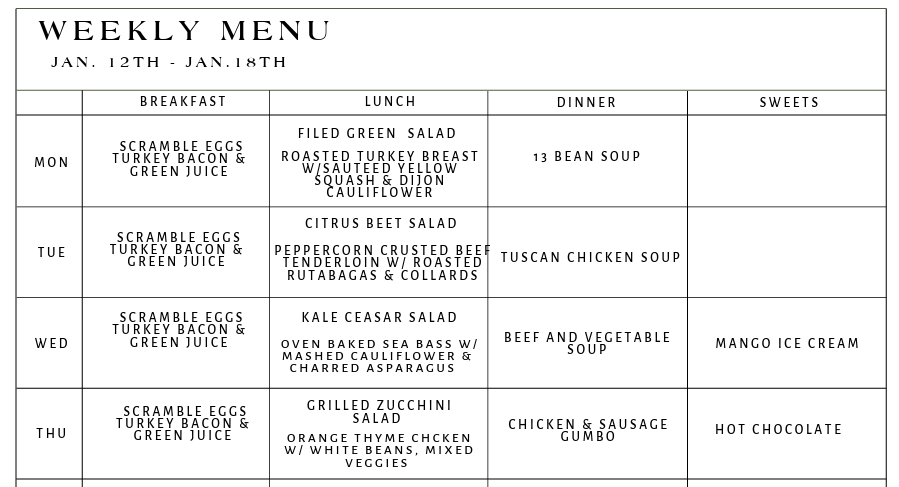
A nurse practitioner at Ovadia Heart Health has assisted the patient’s personal chef in modifying the daily menu. It’s now much more appropriate for someone with insulin resistance and heart failure.
If you’re in a similar situation (or considering your options for a personal chef), it may be useful to hear my recommendations so you can make more informed decisions for your meals.
1. Beans raise glucose more than most people expect
There’s a fairly common misconception that beans don’t spike blood sugar because they have fiber. While it’s certainly true beans have fiber, and fiber slows absorption, the reality is that the total glucose load still matters when insulin signaling is impaired.
As little as one-half cup of carbohydrate-dense beans can contain between 30 and 45 grams of net carbs. Many of my insulin resistant (IR) clients see their glucose rise anywhere from 30 to 60 mg/dL after eating beans. If you continue to get lots of postprandial insulin spikes, you may perpetuate IR even further. This can lead to:
- Down-regulating your insulin receptors
- The suppression of fat-burning hormones
- The promotion of hepatic de novo lipogenesis (or fat made in the liver)
So, yes: whole-food carbs can have a negative impact if you don’t already have good metabolic health.
If you’re an athlete or active person who doesn’t have metabolic issues, beans are fine. But for sedentary, insulin resistant adults, they are often problematic.
2. Desserts train dopamine, not metabolism
You probably don’t need me to tell you this, but sugar is not your friend. Yes, this includes mango ice cream and hot chocolate. Even fruit can cause problems for those who are severely metabolically unwell.
You may also know that sugar can lead to food addictions, which are an increasingly serious problem in the US. Many studies show that sugar can be more addictive than certain types of drugs. This addiction may even affect you physically by:
- Conditioning reward pathways
- Increasing cravings and snacking
- Disrupt hunger hormones like leptin and ghrelin
- Lead to severe sugar addictions that negatively affect the mind (read: Alzheimer’s disease, or type 3 diabetes)
If you’re metabolically unwell, nightly desserts could keep you in a feed-spike-crash cycle, even if you’re not technically overeating any calories.
Also keep in mind that desserts combine rapid glucose spikes with heavy amounts of fat (i.e., the cream in your ice cream), which is often a worst-case combo for insulin signaling.
Which leads into my final point…
3. Juicing removes the metabolic brakes
We’ve been conditioned to think that green juice is a health food. But this isn’t true for the vast majority of people, and certainly not first thing in the morning.
First things first, juicing significantly affects the quality of your food. It removes the act of chewing, which is scientifically proven to manage hunger hormones. It also removes the fiber structure of the food you eat, so you’re destroying certain nutrients that could help delay the onset of a sugar spike.
Your ‘green juice with apple’ is functionally sugar water with chlorophyll.
Two other things to keep in mind:
High amounts of fructose
Studies show that fructose, or the sugar found in most fruits, promotes fatty liver, high triglycerides, and worse hepatic insulin resistance in patients with underlying metabolic dysfunctions. That’s because fructose essentially bypasses insulin regulation and is metabolized almost exclusively in the liver. Hence, it causes a great deal of inflammation.
The antioxidants don’t matter all that much
True, those greens in your green juice contain antioxidants and polyphenols, but you typically get more benefit from chewing them, plus a side of fat or protein. Blending and juicing doesn’t magically condense more heart-healthy foods into your cup.
Remember: a glucose spike plus antioxidants is still a glucose spike.
How do you build a healthier meal plan?
The revised menu for that particular member is similar, but no longer contains the desserts, juice, and beans. Now it’s truly healthy, and fits that individual’s needs.
No matter how you choose to prepare your food, whole, real food must be on the menu, but you need to be mindful about what foods you eat if you’re metabolically unhealthy. That’s one reason why you don’t want to hire just anyone to do the planning. That means, for the most part, you have three major options.
First, delegate the process to a like-minded friend or family member. Bonus points if they’re as interested in metabolic health as you.
Second, ordering meal prep services with professional guidance. If you want the services of a professional chef, know that the team at Ovadia Heart Health would be more than happy to review their proposed menu with you.
The third and final option is to cook everything yourself. It takes more time than having a chef, but you only need a few simple kitchen skills to feed yourself nutritionally dense food.
You’re welcome to read this roundup article detailing everything you should know about cooking from home. I also wrote an entirely new book explaining the ins and outs of my 4-week elimination diet.