You’ve no doubt seen them around every health-related corner: peptides are quickly becoming the new must-have in biohacking and concierge medicine. But while you’re probably well-aware of the weight loss variety, you may not know there’s quite a substantial list of other types. For example, varieties for inflammation control to protect your heart, or growth hormone to help you build muscle faster.
Could peptides be a new horizon for ensuring better heart health? What about recovering from metabolic syndrome?
I’ll present you with the facts so you can come to your own conclusions. I’ll also present you with alternatives if you’re not sure it’s right for you.
Article overview:
- Peptides are short amino acid chains that are particularly interesting for heart and metabolic health, such as helping to control inflammation.
- Many peptide options on the market are experimental, unregulated, and potentially contaminated, although this isn’t always disclosed by the influencers promoting them.
- Lifestyle habits like eating whole foods, managing sleep and stress, and engaging in resistance training can stimulate many of the same peptide pathways without the cost or risk of pharmaceutical peptides.
A brief definition of ‘peptide’
A peptide is a short chain of amino acids linked together by peptide bonds, which are essentially smaller versions of a protein. They play a wide variety of roles in the human body, like regulating hormones and controlling blood sugar.
To enhance what their body already does, many people take peptides in the form of pills or injections. You can also purchase some peptides as dietary supplements. For example, you might purchase creatine to build muscle, or take collagen supplements for your skin and hair.
Again, you’re likely familiar with some of the most popular peptides, like GLP-1s and insulin injections. But several other use cases address other areas of metabolic health, like:
Immune function
Peptides help to mobilize the immune system against foreign invaders, and newer work is focused on harnessing that function to treat disease. This may hold merit in fighting against autoimmune disorders, which are on the rise in developed countries.
Muscle growth and recovery
Some peptides can help you increase muscle growth, while others reduce muscle inflammation. For example, BPC-157 may improve structural recovery after fractures, strains, and similar injuries. Others, like ipamorelin or CJC-1295, may increase growth hormone and improve lean muscle and body composition.
Inflammation reduction
One of the most important use cases, especially to me as a heart surgeon, since chronic inflammation is one of the central drivers of heart disease.
For example, GHK-Cu has been shown to reduce inflammatory markers in tissue, including cytokines. Another peptide already mentioned here, BPC-157, may reduce pro-inflammatory signaling at the cellular level.
So…what’s the catch?
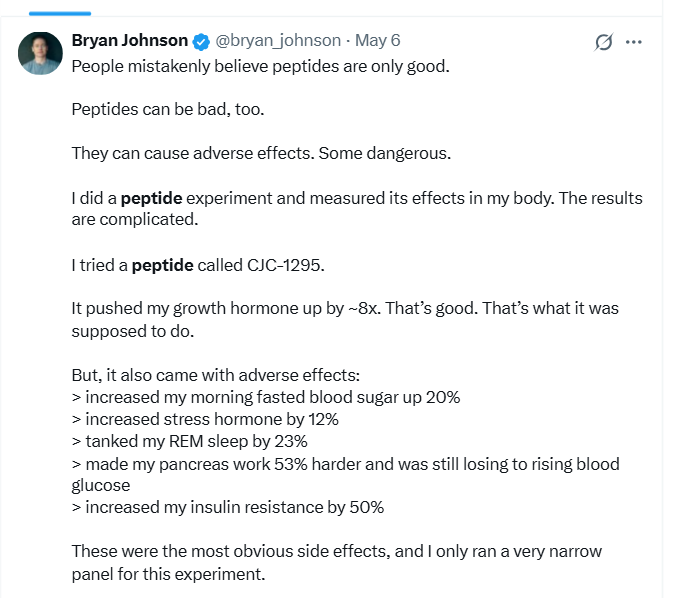
On the surface, peptides sound like a no-brainer for optimizing health. But in the healthcare industry, anything that sounds too good to be true probably is. That’s why you need to be careful where your health advice comes from.
Yes, many peptides occur naturally in the body. But many options on the market are fairly experimental, with formulation ‘cocktails’ that are dubious at best. BPC-157 and TB-500, for example, are two fairly popular options pushed by influencers. And yet, we know very little about how they might affect your body for the long haul. Not to mention how they might spur on visits to the emergency room.
I’ll let Dr. Elan Goldwaser, a sports medicine physician with NewYork-Presbyterian/Columbia University Irving Medical Center, summarize this:
“There is a theoretical risk that peptides could accelerate the growth of an undiagnosed cancer cell. Other risks may include hormone imbalances or water retention. Most importantly though, a lot of these products could be contaminated because they’re from unregulated areas or the “gray market”. This stuff could make you feel great by design, but really it’s harming your body.”
So if you want my opinion: no, I don’t think peptides are a miracle cure-all for metabolic health. But I do see lots of potential, especially when they’re properly explained and prescribed to patients.
The North Star needs to remain you and what is best for your lifestyle. And yes, supplements and peptides can be part of that.
But in most circumstances, they act like a band-aid over a much bigger problem: lifestyle. Once you take off the band-aid, all the bad of your previous lifestyle choices may come back. I’d much rather design a custom roadmap to help with habit and behavior change first, then prescribe extras that can help you achieve your goals.
How to naturally tap into peptides
Not sold on the idea of peptide therapy? The good news is, there are alternative approaches for reaping the benefits of peptides in your metabolic health journey. The following list explains some simple ways to get there, plus suggestions for incorporating them into your own life.
Eat whole, real food
Whole, real food sources that boost human peptide production, including anti-inflammatory peptides, include:
- Meat
- Fish and shellfish
- Hemp seeds
You can learn more about food-derived bioactive peptides here.
It’s not just what you eat that can improve peptide production — it’s also what you don’t. Some studies suggest that low-carb diets may improve the concentration of peptides in your body, especially for those suffering from metabolic syndrome. That means cutting out processed food, added sugar, and potentially even fruit, if you’re insulin sensitive or if you may be prediabetic.
I’d suggest starting with a 30-day elimination diet, then tracking certain biomarkers to see if you’re experiencing improvement. You can learn more about this in my book: Stay Off My Kitchen Table.
Sleep and stress management
Poor sleep and chronic stress are two of the fastest ways to suppress your body’s natural peptide production. This is particularly true of growth hormone, which is usually secreted during periods of deep sleep.
I recommend focusing on the chicken-or-the-egg scenario: seven to nine hours of quality sleep, plus ways to healthily relieve stress.
Engage in progressive resistance training
Speaking of growth hormone, resistance training is one of the most well-documented triggers for peptide production. This includes IGF-1, which plays a direct role in muscle repair, fat metabolism, and metabolic health.
This results in similar benefits that people pay good money for in peptide clinics, like weight loss, muscle growth, and better blood sugar management.
Which option is right for you?
The answer comes down to what you’re looking for with your health.
If you want to address a specific issue, and you have access to a doctor who can help you make informed decisions, peptides could be useful for repairing and supporting your lifestyle changes. On the other hand, if you still feel unsure, or if you’re concerned about peptides’ long-term effects, there’s nothing wrong with taking the ‘slow route’ to restore your metabolic health.
Start by finding a doctor or coach you can trust, then setting a baseline for where your health is today.
Not sure where you stand with your metabolic health? Determine if you have the signs of metabolic syndrome by taking my dedicated quiz here.